

Virtual Geological Data Analysis: The Future of Mining

Mining is evolving. The days of relying solely on physical samples and manual interpretation are fading fast. Today, the future lies in harnessing the power of technology to transform raw geological data into clear, actionable intelligence. This transformation is not just a trend; it’s a revolution. And at the heart of this revolution is virtual geological data analysis.
Imagine having the ability to peer beneath the earth’s surface without digging a single hole. Picture making decisions faster, with more confidence, backed by data that’s been meticulously analyzed and visualized in a virtual environment. This is not science fiction. This is the new reality for mining companies and exploration teams worldwide.
Why Geological Data Virtual Analysis is a Game-Changer
Mining is complex. Geological data is vast, varied, and often overwhelming. Traditional methods of data analysis can be slow, prone to error, and limited by human capacity. Geological data virtual analysis changes the game by:
Integrating multiple data sources: Combining satellite imagery, geophysical surveys, drill hole data, and more into a single, coherent model.
Enhancing visualization: Creating 3D models that bring geological structures to life, making it easier to understand spatial relationships.
Improving accuracy: Using advanced algorithms and machine learning to detect patterns and anomalies that might be missed by the human eye.
Speeding up decision-making: Allowing teams to simulate scenarios and predict outcomes before committing resources.
This approach is like having a high-powered microscope for the earth’s crust. It reveals hidden details and connections, turning complexity into clarity.

How Virtual Geological Data Analysis Transforms Exploration and Mining
Exploration is the first step in mining, and it’s fraught with uncertainty. Virtual geological data analysis reduces that uncertainty by providing a clearer picture of what lies beneath. Here’s how it works in practice:
Data Collection and Integration
Geological data comes from many sources: drilling logs, geochemical assays, geophysical surveys, and remote sensing. Virtual analysis platforms integrate all these data points into a unified digital environment.
3D Geological Modeling
The integrated data is used to build detailed 3D models of the subsurface. These models help identify mineral deposits, fault lines, and other critical features.
Simulation and Scenario Testing
Mining teams can run simulations to test different extraction methods, assess risks, and forecast production outcomes.
Real-Time Collaboration
Virtual platforms enable teams across the globe to collaborate in real time, sharing insights and making decisions faster.
For example, a mining company exploring a remote region can use virtual geological data analysis to pinpoint the most promising drill sites. This targeted approach saves time, reduces costs, and increases the chances of success.
The Role of Technology in Geological Data Virtual Analysis
Technology is the backbone of this transformation. Several key innovations drive the effectiveness of virtual geological data analysis:
Artificial Intelligence and Machine Learning
AI algorithms analyze vast datasets to identify patterns and predict mineralization zones. Machine learning models improve over time, becoming more accurate with each new data input.
Cloud Computing
Cloud platforms provide the computational power needed to process large datasets quickly. They also facilitate data sharing and collaboration across continents.
Geospatial Information Systems (GIS)
GIS tools integrate spatial data with geological information, enabling precise mapping and analysis.
Virtual and Augmented Reality
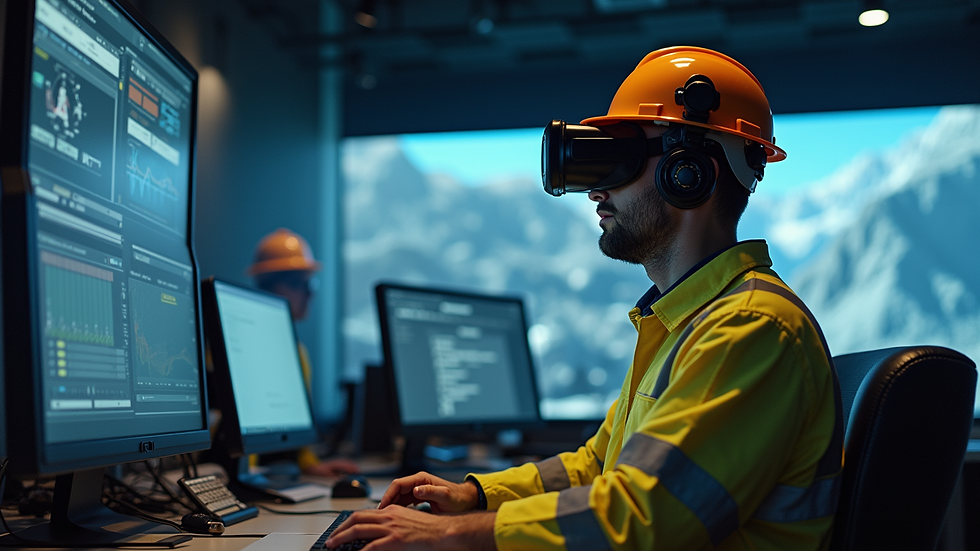
VR and AR technologies allow geologists and engineers to immerse themselves in 3D models, exploring underground structures as if they were physically present.
These technologies work in harmony to create a seamless, efficient workflow that turns raw data into strategic insights.
Practical Steps to Implement Virtual Geological Data Analysis
Adopting virtual geological data analysis requires a strategic approach. Here are practical steps mining companies can take to integrate this technology into their operations:
Assess Current Data Infrastructure
Evaluate existing data collection, storage, and processing capabilities. Identify gaps and areas for improvement.
Invest in Training and Skill Development
Equip your team with the skills needed to use virtual analysis tools effectively. This includes training in data science, GIS, and 3D modeling.
Choose the Right Technology Partners
Collaborate with technology providers who understand the mining industry and can tailor solutions to your needs.
Start with Pilot Projects
Implement virtual geological data analysis on a small scale to test workflows, identify challenges, and demonstrate value.
Scale Up and Integrate
Once proven, expand the use of virtual analysis across exploration and mining operations, integrating it with other business systems.
Continuously Monitor and Improve
Use feedback and performance data to refine processes and technology use.
By following these steps, mining companies can unlock the full potential of virtual geological data analysis, driving better outcomes and greater efficiency.
Looking Ahead: The Future Landscape of Mining
The mining industry stands on the brink of a new era. Virtual geological data analysis is not just a tool; it’s a catalyst for transformation. It empowers companies to:
Make faster, more confident decisions
Reduce environmental impact by minimizing unnecessary drilling
Optimize resource extraction and operational efficiency
Enhance safety by predicting geological hazards
As data becomes more complex and the demand for minerals grows, the ability to analyze and act on geological information quickly will be a key competitive advantage.
The future of mining is virtual, dynamic, and data-driven. Embracing this future means embracing innovation, agility, and intelligence.
Mining is no longer about digging blindly. It’s about seeing clearly beneath the surface, understanding the story the earth tells, and acting with precision. Virtual geological data analysis is the lens that brings this story into focus.

Comments